1.The three levers
A payout curve has three parts. The threshold is the attainment below which the component pays nothing, often 50 to 70 percent of quota. The target zone pays at a base rate up to 100 percent. The accelerator pays a higher rate above 100 percent, sometimes stepped again at 120 or 150. Caps, where they exist, end the curve.
Each lever has a cost and a behavior. A higher threshold saves money on low performers and demotivates the people just under it. A richer accelerator costs money on the top and concentrates it. A cap saves money and tells your best rep to stop selling in November.
2.Model it before you argue about it
The committee on the demo book wanted the entry threshold at 70 percent instead of 60. The honest answer is 'it depends on who was between 60 and 70 this year', and that is a calculation, not an opinion.
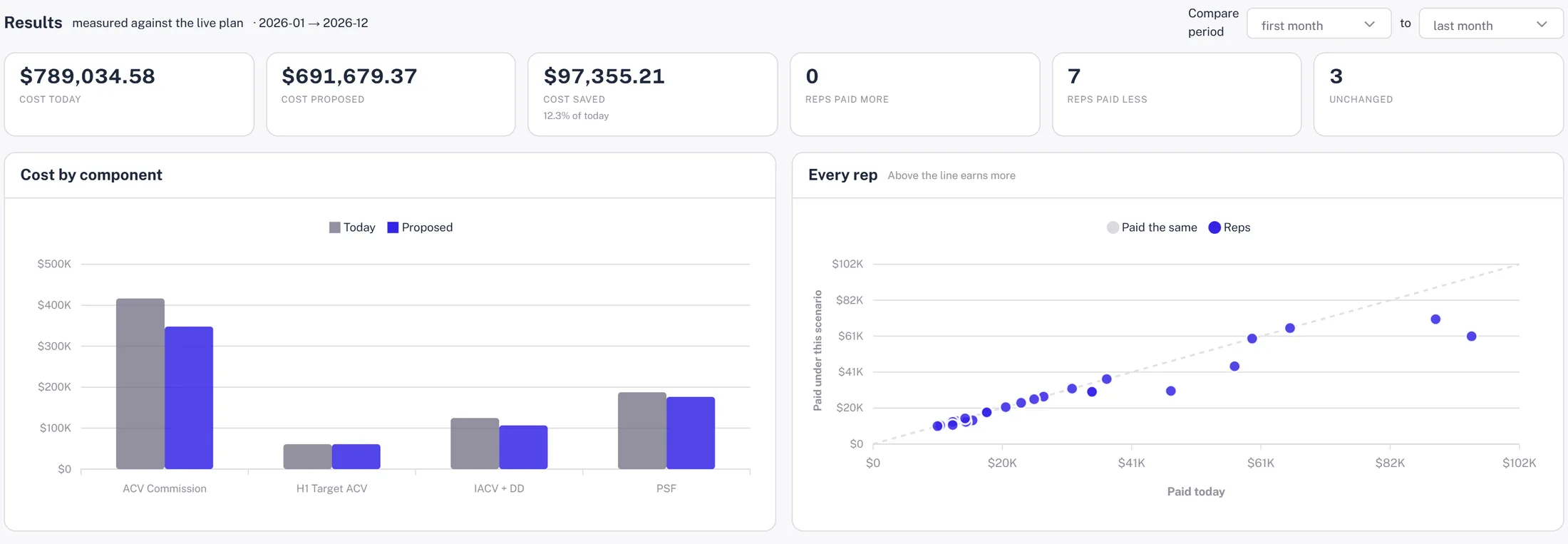
A scenario forks the whole data set and the plan logic into a copy, changes the two cells in the payout tiers, and runs the year with the same engine that pays the reps. In about ten seconds the result is cost today, cost proposed, who is paid more and who is paid less, by component.
On the demo book: $789,035 today, $691,679 under the change. $97,355 saved. Seven of ten reps paid less, none paid more, three unchanged.
3.Read the attainment curve for the cliff
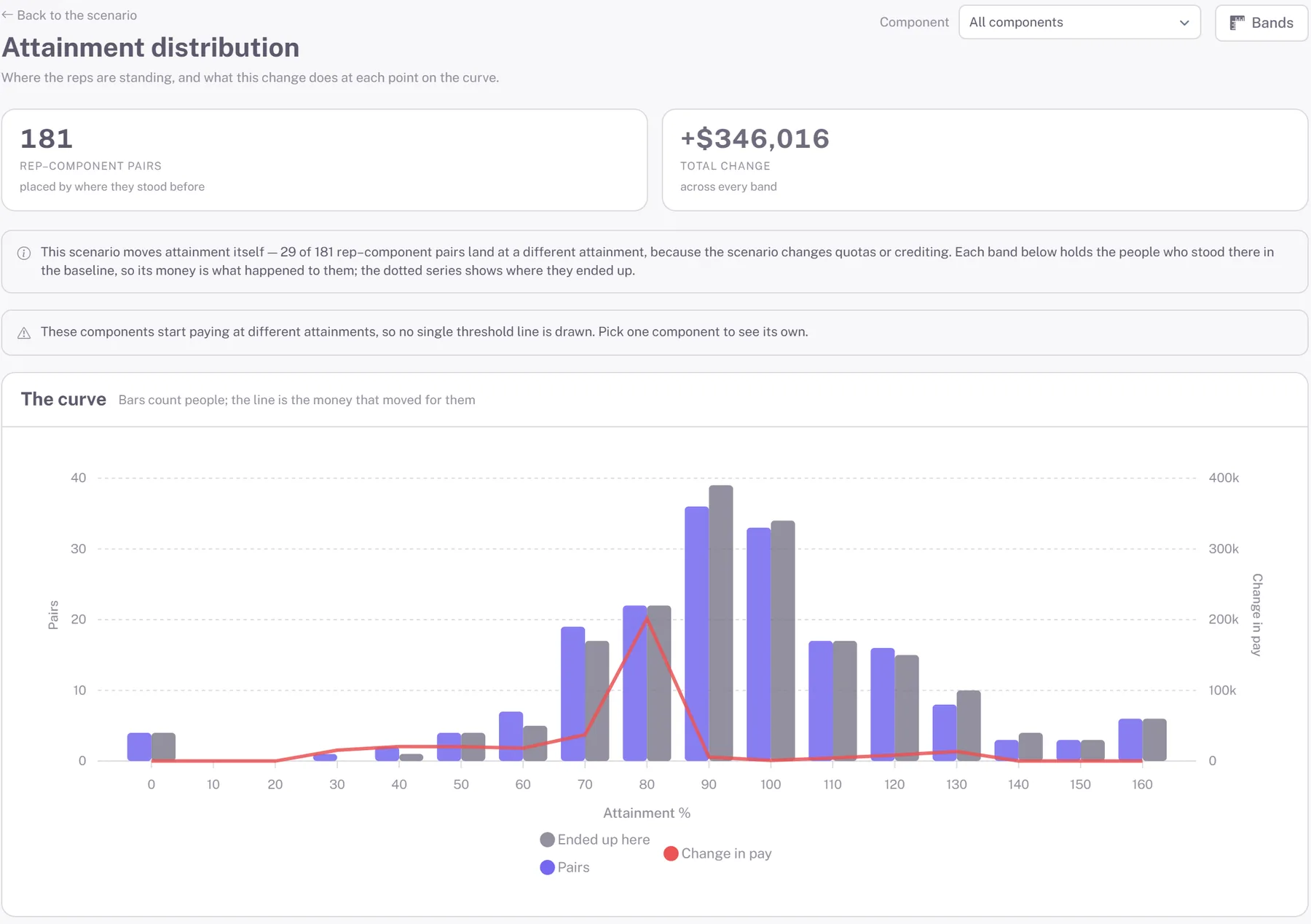
The total hides the problem. The attainment distribution puts every rep-component pair where it stood before the change and shows what the money did at each band. On the demo book the hardest-hit band is 60 to 70 percent: the reps who were just over the old threshold and are now just under the new one.
That band is where the revolt comes from. People at 40 percent were not getting paid anyway. People at 65 percent were, and now are not, for the same year of work. If you move a threshold, you owe that band a conversation, a ramp, or a transition rule, and you should know how many of them there are before the plan ships.
4.See who it lands on
A change that looks fair in total can land on one region, one role or one tenure cohort. Group the same scenario by region and the demo book shows US West carrying the largest cut. Group by tenure and you may find the change is a tax on second-year reps. Neither is visible in a total.
This is also where legal and HR want to look. A threshold change that happens to fall on one protected group is a problem even when nobody intended it.

5.Compare it with something kinder
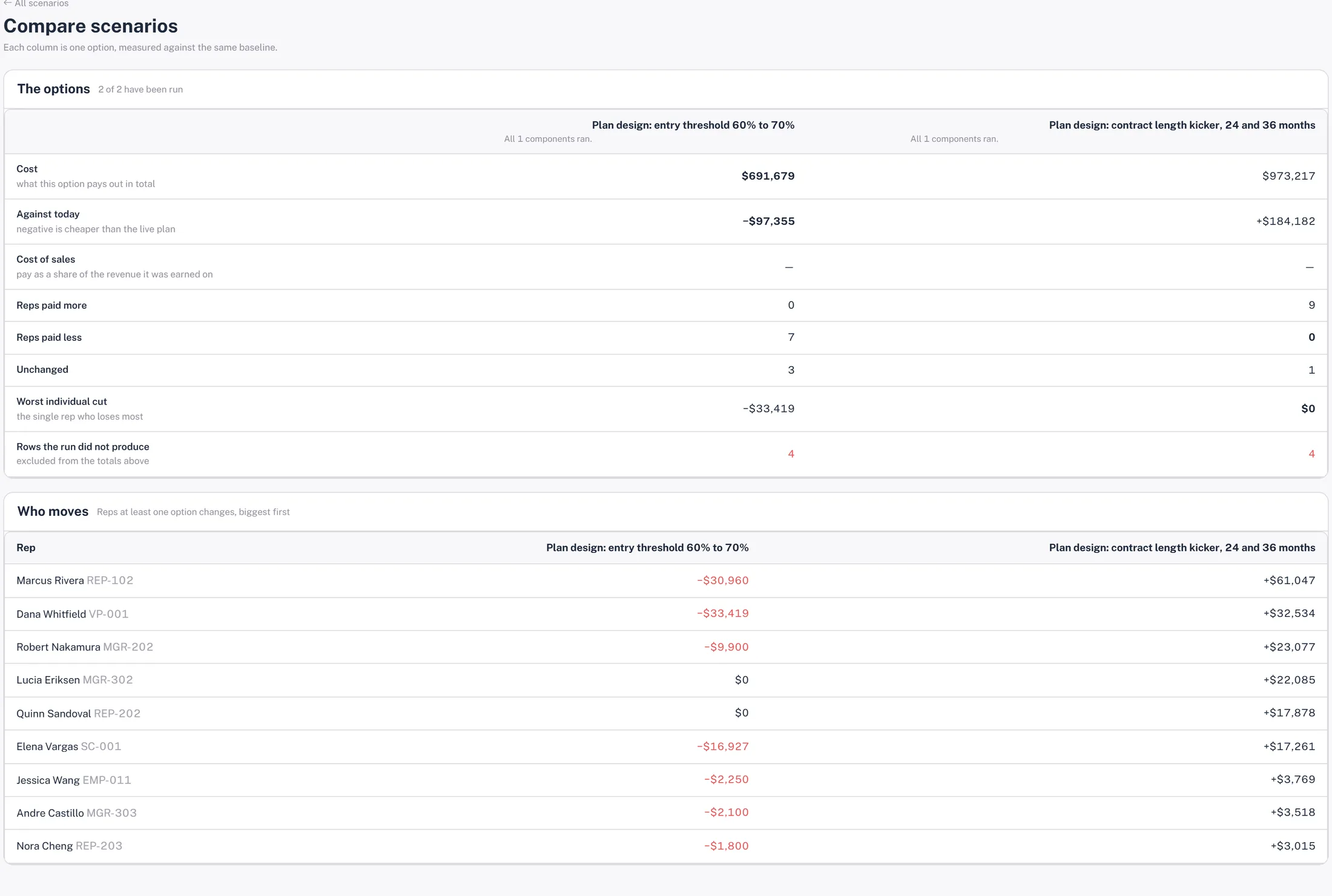
Rarely is there one option. The alternative on the demo book was a contract-length kicker, paying more for 24 and 36 month terms, modeled the same way against the same baseline. Side by side: the threshold saves $97,355 and cuts seven reps; the kicker costs $184,182 more and cuts nobody, while pushing the behavior finance actually wanted.
Put both in front of the committee with the worst individual cut under each. That column changes meetings.
6.Promote from a month, and let the old months stand
When the decision is made, promote the scenario. The rate table gets a new version effective from the month you choose, so earlier months keep paying on the old bands and the change never rewrites a paid period. The promotion is in the audit trail, the next run's diff shows exactly who moved, and the audit pack names the rate version in effect for every period.
Then issue the new plan document. A threshold change is a plan change, and the rep signs it.